Artificial Intelligence is revolutionizing the banking industry at an unprecedented pace. From AI-driven chatbots handling customer inquiries to sophisticated algorithms detecting fraud in real-time, AI has become the backbone of modern banking operations. Financial institutions that embrace AI gain significant advantages in efficiency and customer engagement, while those slow to adapt risk falling behind in an era where data-driven services set the winners apart.
According to a recent analysis, applying generative AI at scale could add $200–$340 billion in value annually to the financial sector through improved customer experience and operational efficiency. In this article, we explore how AI is transforming modern digital banking across multiple domains – from customer experience and security to risk management, credit scoring, and personalized marketing – and what the future holds for the "AI Bank."
Customer Experience Transformation
AI-powered virtual assistants are now capable of handling millions of customer interactions simultaneously, providing personalized recommendations and resolving issues faster than ever before. This 24/7 availability has redefined customer expectations.
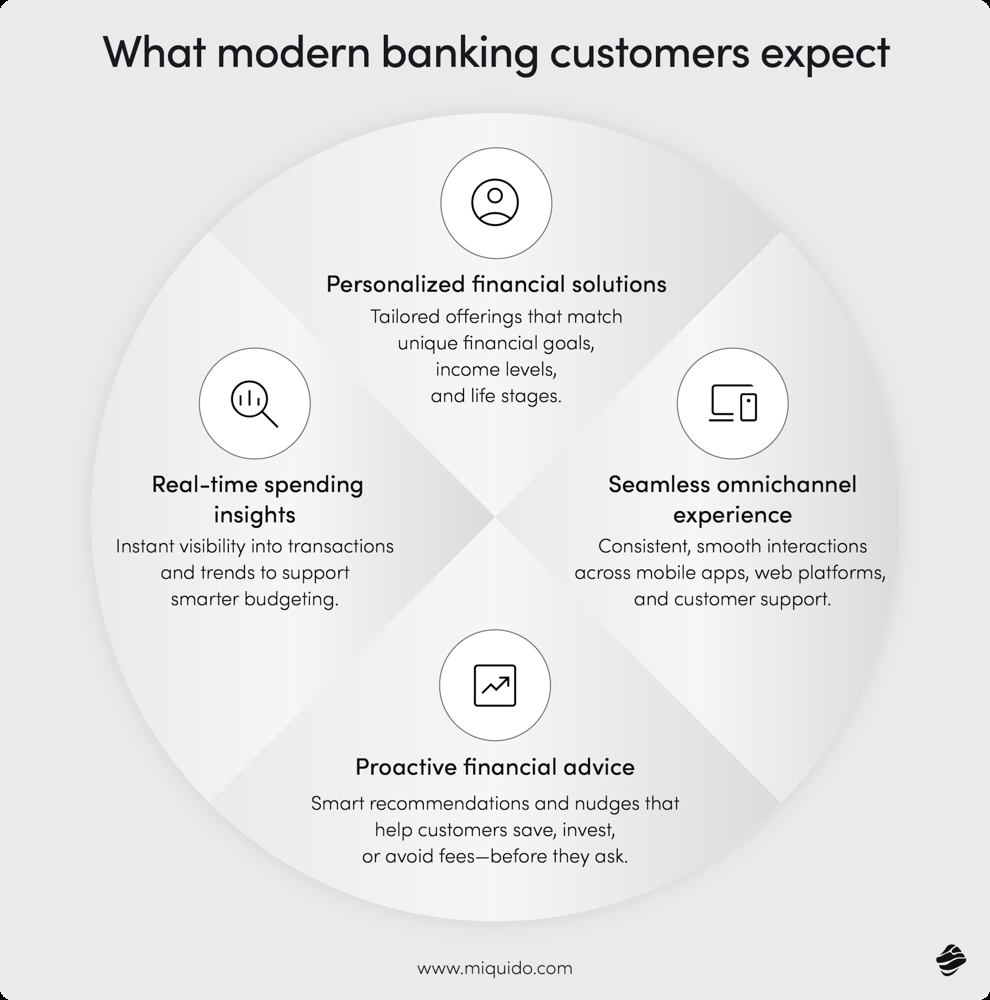
Modern banking customers now expect highly personalized solutions, seamless omnichannel experiences, proactive financial advice, and real-time spending insights – similar to what they receive from leading tech companies – and AI is a key enabler for banks to meet these rising expectations. AI-powered virtual assistants and chatbots are redefining customer service in banking. Unlike traditional service channels limited by business hours, AI virtual assistants provide 24/7 support, handling millions of customer interactions simultaneously and delivering instant responses. These assistants, powered by natural language processing (NLP), understand conversational queries and can resolve common issues or fulfill requests in seconds. This always-on availability and speed have redefined customer expectations, making quick, on-demand service the norm.
Beyond availability, AI enhances personalization in customer interactions. Intelligent chatbots can offer tailored recommendations – for example, suggesting relevant financial products or tips based on a customer's transaction history and profile. AI systems analyze vast amounts of customer data (account activity, past inquiries, spending patterns) to personalize each interaction. This level of service was once only imaginable from big tech companies; now banks are adopting it to deepen customer engagement. Major banks that have rolled out advanced AI chatbots and real-time personalization have reported significant jumps in customer satisfaction. For instance, NatWest (a UK bank) saw a 150% increase in customer engagement after launching an enhanced AI chatbot, and found that automating routine queries (up to 80% of them) led to faster response times and higher service quality. By handling the basic inquiries, AI frees up human staff to focus on complex issues requiring empathy or judgment, thereby improving overall service. In short, AI-powered customer service is more accessible, responsive, and personalized, helping banks meet the heightened expectations of digital-age consumers.
AI-Powered Security and Authentication
Security is paramount in banking, and AI is elevating how banks authenticate users and protect accounts. Traditional login methods (passwords, one-time codes) are increasingly supplemented – or even replaced – by AI-driven biometric and behavioral authentication. Modern banks are using facial recognition, voiceprints, and even unique behavior patterns to verify customers' identities. In fact, biometric logins (asking a user to simply look at their phone or speak a passphrase) have become mainstream in digital banking, offering a seamless yet secure way to log in.
AI algorithms accurately match faces or voice patterns, making authentication both faster and less frustrating for customers, while reassuring them that robust security is in place.
Beyond physical biometrics, banks are leveraging behavioral biometrics – subtle patterns in how individuals interact with devices – as an additional invisible layer of security. AI can analyze how you type, swipe, or hold your phone to determine if the behavior matches your usual profile. For example, the AI might monitor keystroke dynamics, mouse movements, or the pressure and angle when using a touchscreen. These tiny behavioral signals create a unique "fingerprint" for each user's habits. If someone logging in deviates significantly from the genuine customer's patterns (say, typing much faster or using a different rhythm), the system can flag the session as potentially fraudulent. Importantly, this all happens in the background without adding friction for legitimate users.
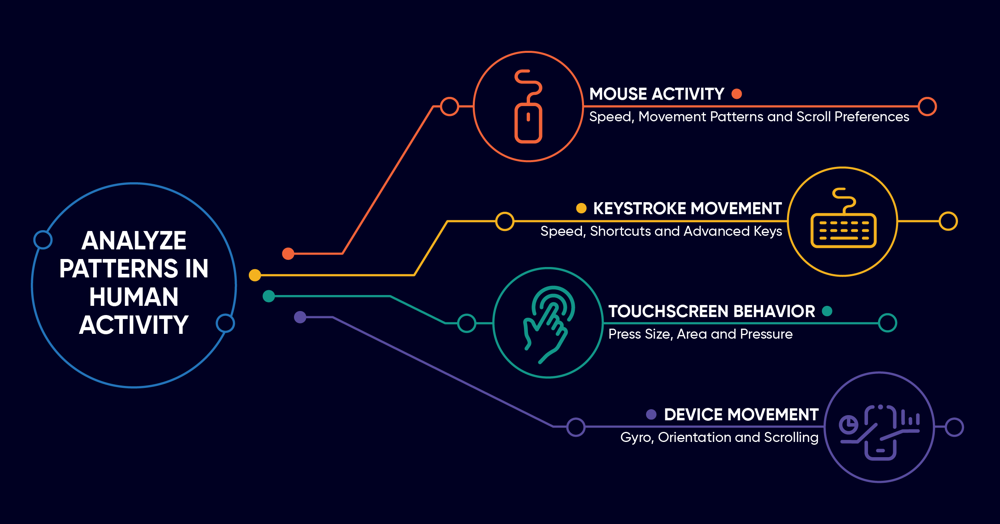
AI-driven behavioral biometrics analyze patterns in user activity – such as mouse movements, typing cadence, touchscreen pressure, or device orientation – to distinguish genuine customers from imposters, enhancing login security without added friction. By continuously monitoring thousands of these parameters during a session, AI-based behavioral analytics can silently detect account takeovers or automated attacks, even when the correct password or OTP (one-time passcode) has been entered. This advanced identification at login dramatically strengthens security, because it's dynamic and adaptive – the system learns your behavior over time and is difficult for fraudsters to mimic.
AI also enables risk-based authentication for transactions. Instead of a one-size-fits-all approach to security, banks are employing AI models that evaluate each transaction's risk in real time to decide if additional verification is needed. Machine learning models continuously monitor account activity and will flag deviations from normal behavior – for example, a sudden login from an unusual location or an unusually large fund transfer out of an account. Low-risk actions (e.g. a routine payment to a familiar payee) might sail through without extra hurdles, providing a smoother experience. But if something looks suspicious or out-of-pattern, the AI can automatically step up the security – by requiring a second-factor authentication, sending an alert, or even temporarily freezing the transaction. This adaptive approach balances security and convenience: legitimate routine transactions flow freely, while unusual activities trigger higher scrutiny. The result is a safer banking environment where customers face fewer unnecessary security prompts, yet fraud attempts are more likely to be stopped in their tracks.
Risk Management and Fraud Detection
In the arms race against financial fraud, AI has become banks' most potent weapon. ML models sift through billions of data points to learn what "normal" behavior looks like, then instantly identify anomalies – often within milliseconds.
How AI Detects Fraud in Real Time
🔍 AI Anomaly Detection Examples
From Reactive to Proactive
Banks are shifting from spotting fraud after it occurs to stopping it as it happens. AI-powered platforms automatically block suspicious transactions and alert customers in real time.
40-60%
Reduction in fraud losses (39% of FIs report)
90%
Of banks globally use AI for fraud detection
ms
Detection speed – milliseconds to flag anomalies
Beyond Fraud: AI Across Risk Management
AI isn't only stopping unauthorized transactions – it strengthens the entire risk management ecosystem:
🏛️ Anti-Money Laundering
Scans transaction networks to spot laundering patterns and suspicious account links far faster than manual reviews
📉 Credit & Market Risk
Predicts defaults and models countless market scenarios to help banks maintain stability
🔐 Cybersecurity
Detects phishing, account takeovers, and abnormal system access in real time
📋 Regulatory Compliance
Automates compliance checks, reduces false alarms, and catches genuine threats humans might miss
The result: a safer banking ecosystem where fraud and risks are identified and addressed before they escalate, protecting both the bank's bottom line and its customers' finances.
AI-Driven Credit Scoring Revolution
AI is transforming how banks assess creditworthiness and make lending decisions. Traditional credit scoring relied on a narrow set of data and often took days to process. Today's AI-driven models take a holistic and inclusive approach, analyzing hundreds of variables in real time.
Traditional vs. AI-Powered Credit Scoring
❌ Traditional Scoring
- Credit bureau scores only
- Income & repayment history
- Days or weeks to process
- Static, infrequently updated
- Excludes "thin file" customers
✅ AI-Powered Scoring
- Hundreds of variables analyzed
- Alternative data sources included
- Real-time, instant decisions
- Dynamic, continuously learning
- Inclusive – evaluates broader behaviors
Alternative Data Sources
AI-based scoring paints a fuller picture by incorporating unconventional data points:
This means people with "thin" credit files – young adults or those without prior loans – can be evaluated more fairly using evidence of regular payment habits in other areas.
Key Benefits of AI Credit Scoring
⚡ Minutes
vs. days or weeks for traditional scoring
↓ Defaults
Early detection of subtle risk signals
↑ Inclusion
Credit access for underserved populations
- Speed – instant loan approvals improve customer experience and competitive positioning
- Adaptability – models dynamically adjust to changing economic conditions and new data
- Inclusive lending – broader evaluation criteria extend credit to deserving borrowers overlooked by traditional systems
- Continuous learning – ML models refine criteria as more outcome data flows in, leading to increasingly accurate decisions
Challenges & Governance
⚖️ Responsible AI in Credit Scoring
Transparency and fairness remain crucial. Banks must ensure AI models don't unintentionally introduce bias. Regulators push for explainability while acknowledging innovation's potential to broaden credit access. The goal: faster, smarter, and more inclusive scoring – a win-win for lenders and customers alike.
Hyper-Personalization and Customer Retention
In the competitive world of digital banking, keeping customers engaged and happy is paramount – and this is where AI-driven hyper-personalization is making a profound impact. Banks are realizing that to reduce customer churn, they must treat each customer as a "segment of one," offering highly individualized experiences.
💡 The Core Principle
"Data is the new gold" – every click, tap, and transaction provides insight that can be used to tailor services. AI transforms raw data into personalized, real-time customer experiences.
Key Data Sources for CDP Integration
Modern banks invest in Customer Data Platforms (CDPs) that unify data from all sources into one real-time profile:
🌐 Website Visits
Browsing behavior and product interest signals
🏦 Online Banking
Transaction patterns and feature adoption
📱 Mobile App
Engagement frequency, feature usage, session depth
🏢 In-Branch
Service requests, advisory meetings, product inquiries
By consolidating information in a single place, AI models achieve a 360° view of the customer's needs and preferences – the foundation for all personalization efforts.
Predictive Analytics in Action
With rich unified data, banks deploy predictive analytics to anticipate what each customer might need next. AI algorithms analyze spending patterns, saving habits, life events, and browsing history.
🎯 AI-Driven Proactive Engagement
This is proactive engagement – the bank reaches out with exactly the right message before the customer asks, making banking feel like a personal financial concierge.
Omnichannel Consistency
Delivering AI-driven insights through the right channel at the right time is critical. Banks use omnichannel AI integration for seamless experiences:
🔄 Omnichannel Flow
Core Elements of AI-Driven Personalization
🏗️ Four Pillars of Personalization
- Unified Customer Data Platform – single source of truth across all channels
- Predictive Analytics – anticipate needs before the customer articulates them
- Dynamic Content Personalization – tailored offers, advice, and messaging in real time
- Omnichannel Consistency – seamless experience regardless of touchpoint
Impact on Customer Retention
AI-powered personalization has a direct and measurable impact on retention:
20-30%
Engagement & conversion uplift
360°
Customer view from unified data
↓ Churn
Drastically reduced customer attrition
- Emotional connection – personalization builds loyalty; customers feel understood and valued
- Proactive financial advice – tailored tips improve the customer's financial well-being
- Non-intrusive cross-selling – recommendations align with genuine goals, perceived as helpful
- Reduced churn – customers who feel valued are far less likely to leave for competitors
Monetizing Data Ethically
AI helps banks monetize data in ethical ways by identifying unmet needs and optimizing offerings. Best practices from e-commerce are being adopted:
- Recommendation engines – "customers like you also liked…" applied to financial products
- A/B tested personalized content – continuously optimized for relevance
- New business models – partnering with fintechs via open banking for third-party services
- Personalized financial advice apps – leveraging data for proactive guidance
The outcome is a banking experience that feels increasingly tailored, engaging, and anticipatory – much like a well-tuned shopping platform, but in service of financial health.
The Future of AIBank
As AI technology continues to evolve, we stand on the cusp of a true AIBank revolution – a future where banking is smarter, more proactive, and seamlessly integrated into our lives.
Predictive Banking Services
In the coming years, AI will anticipate customer needs before they arise, transforming banks from passive service providers into active financial partners.
🔮 Predictive Banking in Action
Human-AI Collaboration
Bank employees will be empowered by AI tools to deliver superior service. The future model is human expertise + AI intelligence working together:
🤝 The AI Co-Pilot Model
🤖 AI Handles
- Portfolio analysis & pattern detection
- Routine task automation
- Regulatory compliance checks
- Back-office operations
👤 Humans Focus On
- Strategic advisory conversations
- Creative problem solving
- Trust-building relationships
- Complex judgment calls
15pp
Cost-efficiency improvement for AI-first banks
AI-First
The operating model of next-gen banks
Open Banking & Ecosystem Services
The future AI Bank will leverage Open Banking ecosystems and partnerships, drawing on data spanning multiple institutions with customer consent:
- Account aggregation – a single AI-powered app that optimizes money across all accounts
- Smart fund management – automatically move funds between checking and savings to maximize interest
- Cross-lender comparison – find the cheapest loan across all available providers
- Automated bill negotiation – AI negotiates bills and subscriptions on the customer's behalf
- Generative AI reports – monthly personalized financial health reports in plain language with forecasts
The AI-First Bank Vision
The bank of the future will still safeguard money, facilitate payments, provide credit, and help customers grow wealth – but how it delivers will be fundamentally reimagined:
✨ Key Outcomes of the AI-First Transformation
"The AIBank revolution is not a distant fantasy – it's already underway. The winners will be those institutions that harness AI to deliver hyper-personalized, secure, and predictive banking experiences – where your bank truly knows you and is looking out for you at every step."